After a teeth-whitening treatment, being mindful of what you eat during the first few days is key to maintaining the results and preventing new staining. At Clínica Ilzarbe, with over 40 years of experience, we recommend temporarily following a “white diet” that avoids certain foods and beverages with strong coloring properties.
Key Takeaways
- Avoid coffee, tea, red wine, dark-colored soft drinks, and sauces with intense pigments.
- Opt for light-colored, low-pigment foods during the first few days.
- Not all foods stain with the same intensity.
- Following a “white” diet for the duration recommended by your specialist helps protect your whitening results.
Why is it crucial to watch what you eat after teeth whitening?
After a teeth-whitening treatment, your teeth are temporarily more susceptible to staining from external pigments. Therefore, during the first 24 to 72 hours, you should avoid foods and beverages with intense colors.
Peroxide-based whitening gels act on the compounds responsible for tooth color and cause temporary changes in the tooth’s surface structure and water content. During this period, temporary tooth sensitivity may occur, which usually subsides quickly. If the discomfort is severe or persistent, it is important to consult the dentist who performed the treatment.
For this reason, immediately after treatment, it is recommended that you:
- Avoid highly pigmented foods and beverages.
- Reduce your intake of acidic foods and beverages that may increase sensitivity.
- Prioritize light-colored, mildly seasoned foods.
- Maintain gentle and consistent oral hygiene.
These precautions are especially important during the first few days, when the tooth’s color is still stabilizing.
Foods You Should Avoid After Teeth Whitening (Complete List)
During the first few days after teeth whitening, it’s best to avoid foods with intense pigments, food coloring, or dark seasonings. Not because they’re permanently “off-limits,” but because they can cause new staining while the tooth color is still stabilizing.
Pigmented Fruits and Vegetables
Some fruits and vegetables contain very intense natural pigments. During the first 24–72 hours, you should especially limit your intake of:
- Strawberries, blueberries, and cherries: They contain red, purple, and bluish pigments.
- Beets: known for their high staining potential.
- Spinach: Its intense green color can leave pigmented stains.
- Carrots: contain orange-hued carotenoids.
- Tomatoes: especially in sauces or concentrated preparations.
In the first few days after teeth whitening, it is recommended that you avoid these foods, following your dentist’s instructions.
Dark-colored sauces, spices, and seasonings
Many sauces and spices contain pigments that can easily stain. Among those you should avoid are:
- Soy sauce: very dark and concentrated.
- Balsamic vinegar: has an intense color.
- Curry and turmeric: contain particularly persistent yellow pigments.
- Paprika: may leave reddish stains.
- Tomato sauce: combines intense pigmentation with some acidity.
As an alternative, you can use olive oil, light-colored herbs, salt, or mild seasonings. You can also opt for less pigmented vinegars, such as light apple cider vinegar, as long as they do not cause sensitivity.
Proteins and Processed Foods with Colorants
Some processed foods contain natural pigments or added colorings that should also be temporarily limited.
These include:
- Chorizo and cured meats with paprika.
- Cold cuts with intense colors.
- Dark chocolate.
- Colored candies and sweets.
- Ultra-processed foods with added food coloring.
In these first few days, it’s best to choose meats, fish, and simple dishes with minimal seasoning and light colors. If a food has a very intense color or easily stains your mouth, it’s best to save it for later.
Drinks to Avoid to Prevent Staining Your Teeth
Not all beverages affect the results of teeth whitening in the same way. Some are known for their ability to stain teeth, while others are known for their acidity, which can increase sensitivity or make it easier for pigments to adhere.
- Coffee: one of the main causes of external staining due to its dark color and frequent consumption.
- Black and red tea: These contain tannins and intense pigments that can darken tooth color.
- Red wine: combines two unfavorable factors—high pigment content and acidity.
- Cola drinks: Their dark color and acidic nature make them an unwise choice after treatment.
- Bottled juices and energy drinks: may contain colorants, acids, and sugars.
- Citrus fruits and carbonated beverages: even if they are clear, they can increase sensitivity due to their acidity.
These days, water is still the safest option for staying well-hydrated without affecting the results of teeth whitening.
What CAN You Eat? The “White Diet” Explained
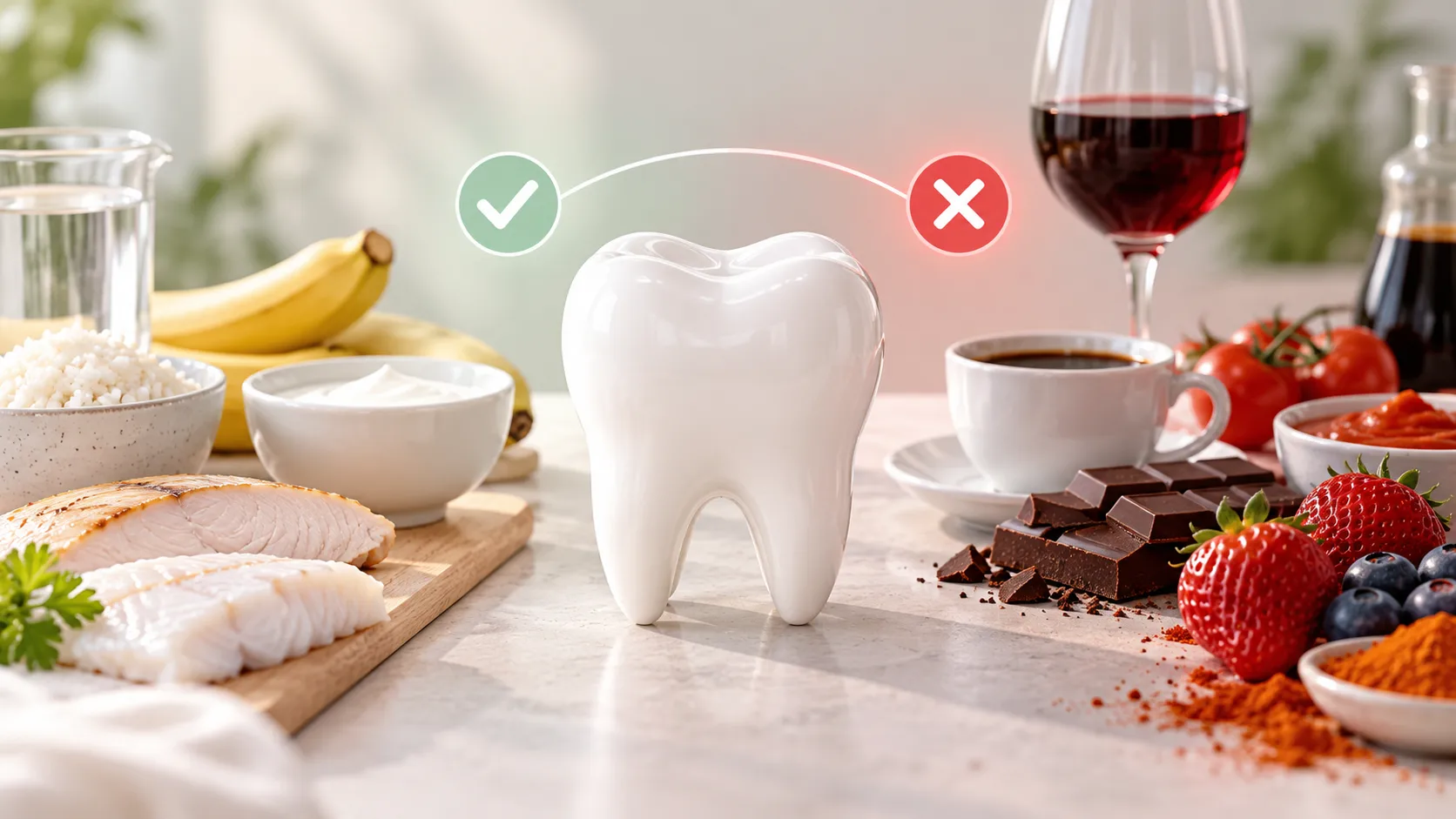
The so-called “white diet” involves choosing light-colored, low-pigment foods prepared in simple ways for a few days. The idea is to maintain a normal diet while temporarily avoiding ingredients that could affect the results of teeth whitening.
| Recommended Foods | Best to avoid temporarily |
|---|---|
| Chicken and turkey | Chorizo and paprika-flavored sausages |
| White fish | Meats with dark sauces |
| White rice | Rice dishes with tomato, curry, or rich saffron |
| Pasta with cream or a light sauce | Pasta with tomato sauce or pesto |
| Boiled or steamed potato | Dishes prepared with highly pigmented spices |
| Fresh cheese and plain yogurt | Products containing fruit or food coloring |
| Milk | Cocoa or berry smoothies |
| Banana | Berries and highly pigmented fruits |
| Egg white | Dishes with rich sauces |
You can also opt for soft omelets, white bread, light soups, or simple dishes made with olive oil. The important thing is to prioritize foods with little pigment without turning these days into an overly restrictive diet.
How long should you stick to the white diet?
The duration depends on the type of whitening treatment and each patient’s sensitivity, but there is an initial period during which it’s best to be especially careful about what you eat.
- Phase 1 | First 24–48 hours: This is the most important time. It is recommended to strictly follow a “white” diet and avoid coffee, tea, wine, dark sauces, highly pigmented fruits, and foods containing food coloring.
- Phase 2 | Days 3–7: You can gradually expand your diet, although it’s still advisable to limit foods and beverages that are most likely to stain your teeth.
- Up to 7–10 days: For at-home treatments using trays or combination protocols, these restrictions may continue for as long as the whitening process is ongoing.
The time required also varies depending on the technique used. If you’re still deciding which option to choose, you can compare the different teeth-whitening treatment options and learn about the differences between the various protocols.
The final recommendation should always be tailored to the treatment performed and the dentist’s instructions.
Extra Tips from Clínica Ilzarbe for Keeping Your Teeth White
In addition to watching what you eat during the first few days, some simple habits can help you maintain your whitening results for longer.
- Rinse your mouth with water after eating or drinking. This helps remove food particles and stains before they stay on the surface of your teeth for too long.
- Use straws with pigmented beverages. If you drink any colored beverages, using a straw can reduce direct contact with your front teeth.
- Avoid toothpastes that are too abrasive. Products such as some toothpastes containing activated charcoal can be harsh if used regularly. It’s best to choose a toothpaste recommended by your dentist.
- Maintain good daily oral hygiene. Proper brushing and the use of interdental hygiene products help prevent plaque buildup and external staining.
- Don’t neglect professional checkups. At Clínica Ilzarbe Valencia, checkups allow us to monitor the condition of your teeth and determine when maintenance is needed or when you should adjust your habits.
Frequently Asked Questions About Post-Whitening Meals
¿Puedo tomar café con leche o usando pajita tras un blanqueamiento?
During the first 48 hours, it’s best to avoid coffee altogether. After that, if you do drink it, adding milk and using a straw can reduce contact with your teeth, although it’s still advisable to limit your intake.
¿Puedo comer tortilla de patatas o huevo después del tratamiento?
Yes. Boiled potatoes and eggs—especially the egg whites—fit well into a “white” diet and are good choices during the first few days after teeth whitening.
¿Qué pasa si me salto la dieta blanca accidentalmente?
This doesn’t mean you’ve ruined the treatment. If you consume something with strong pigmentation, rinse your mouth thoroughly with water and maintain your usual oral hygiene to remove any residue. Afterward, resume following the “white diet” recommendations for the specified period.
¿Puedo fumar o vapear durante los primeros días?
It is recommended that you avoid smoking and vaping for at least 48–72 hours. Smoke, nicotine, and certain pigments can cause staining and may compromise the aesthetic results achieved through teeth whitening.
Keep Your Smile Radiant in Valencia with Clínica Ilzarbe
Paying attention to your diet during the first few days helps maintain the results better, but every whitening treatment and every patient is different. Our team can help you determine which treatment is best for you and answer any questions you may have about aftercare.
Are you thinking about getting your teeth whitened in Valencia? At Clínica Ilzarbe, we’ll help you find the best option for you.
Schedule an appointment with our team of specialists!