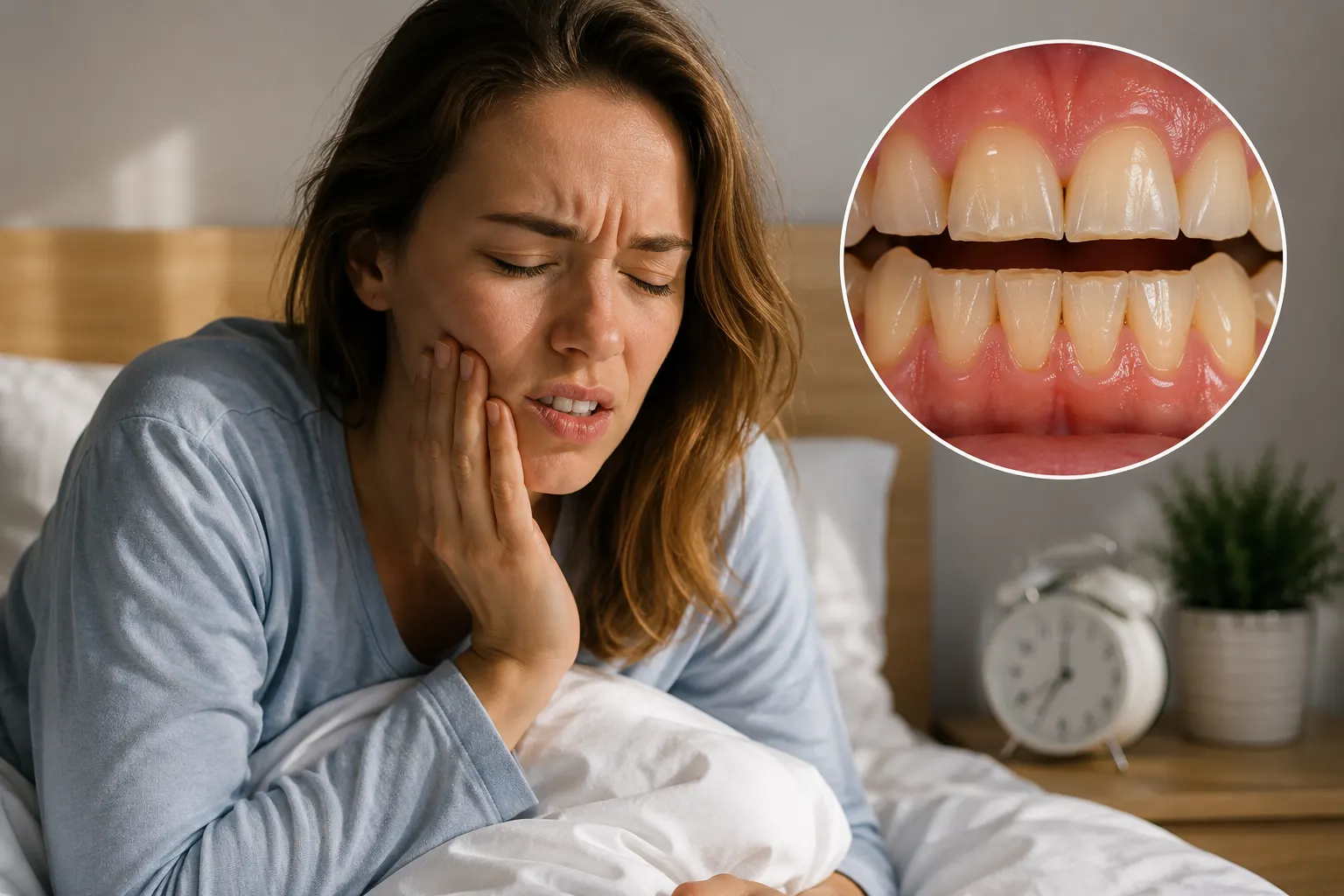
Nocturnal bruxism is the involuntary habit of clenching or grinding one’s teeth during sleep. Since it occurs while we sleep, most people are unaware they have it until the first physical symptoms appear, such as jaw pain upon waking, tension headaches in the temples, or marked sensitivity to hot and cold caused by the progressive wear of tooth enamel.
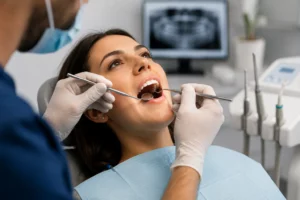
Identifying this problem in its early stages is essential to halting oral health deterioration. Our comprehensive dentistry team at Clínica Ilzarbe (Valencia) helps our patients every day identify the source of these issues in the temporomandibular joint (TMJ), using a preventive approach that protects their smiles and ensures restful sleep.
Main Symptoms of Nocturnal Bruxism Upon Waking Up
The early morning hours are key for detecting sleep bruxism. While sleeping, the force exerted involuntarily on the teeth is exponentially greater than that of normal chewing.
This constant strain on the temporomandibular joint (TMJ) not only affects the teeth but also causes significant tension that radiates to the facial muscles, the head, and the neck, becoming clearly noticeable as soon as you wake up.
Discomfort in the jaw, neck, and ears
During the night, prolonged clenching subjects the masseter muscle and the TMJ to constant pressure. Upon waking, this muscle hyperactivity results in a distinct sensation of jaw stiffness or “fatigue, ” making everyday actions such as yawning or chewing breakfast normally difficult.
Since the craniomandibular muscles are closely connected to the cervical region and the ear canal, the pain is not limited to the mouth but often radiates to other peripheral areas:
- Stiffness and joint stiffness: difficulty or discomfort when opening the mouth fully in the morning.
- Clicking or popping sounds in the TMJ: sounds similar to a “click” or crackling when moving the jaw.
- Cervical and trapezius strain: persistent muscle tension in the neck and upper back.
- Ear discomfort or congestion: a sensation of a blocked ear or a sharp pain in the ear area with no infectious cause. In some cases, ringing or buzzing in the ear (tinnitus) may also occur.
Morning tension headache
One of the most common symptoms of bruxism—and one that is often confused with other problems—is a tension headache upon waking. The continuous, involuntary contraction of the temporal muscle (located on the sides of the head) causes a dull, constant pain concentrated mainly in the temples or forehead.
Unlike common migraines, this discomfort occurs repeatedly upon waking and tends to gradually subside as the facial muscles relax throughout the morning.
Visible signs on the teeth and in the mouth
Beyond joint or muscle pain, bruxism leaves unmistakable signs inside the oral cavity. Although many of these changes progress silently, a self-examination in the mirror or a preventive checkup at the dentist’s office can help identify the early signs of friction on the hard and soft tissues of the mouth before irreversible damage occurs.
Tooth Wear and Accumulated Tooth Sensitivity
Continuous nighttime grinding subjects the teeth to a mechanical force for which they are not designed. Over time, this constant friction causes wear on the tooth surface and flattens the incisal and molar edges, altering the natural anatomy of the smile and reducing the vertical dimension of the bite.
As this habit persists, microfractures develop in the enamel, weakening the tooth’s structure and eventually exposing the dentin (the inner, porous layer of the tooth). With the dentin now unprotected, the patient begins to experience acute tooth sensitivity to thermal stimuli such as hot or cold beverages, sweet foods, or even cold air—a clear sign that the natural protective barrier has been compromised.
Marks on the tongue or inside the cheeks
Involuntary clenching does not only affect the hard structures; the soft tissues of the mouth also react to constant pressure. A very characteristic but little-known sign is the appearance of the linea alba, a small raised area or horizontal white line that forms on the inner surface of the cheeks due to continuous sucking and pressure against the dental occlusal line.
It is also very common to see a scalloped or scallop-shaped tongue, where the lateral edges of the tongue muscle have wavy markings that perfectly match the contour of the teeth, reflecting the force with which the tongue presses against the teeth during sleep.
How to Tell If You Grind Your Teeth When You Sleep Alone
Detecting sleep bruxism is more difficult when there is no one else in the room to hear the characteristic sound of nighttime teeth grinding. If you suspect that you clench your teeth while sleeping but live alone, there are several practical self-screening methods you can try:
- Keep a diary of your morning symptoms: every morning when you wake up, note whether you have a headache in your temples, jaw stiffness, or pain when chewing breakfast. Tracking the frequency of these symptoms helps you identify a clear pattern.
- Self-examination of the masseter muscle: Feel the side of your jaw with your fingers, just above the mandibular angle, and apply light pressure while biting down. If, when pressing, you notice a bulge, tenderness, or excessive tension in the morning, this is a sign of nocturnal muscle hyperactivity.
- Sleep-monitoring apps: Use mobile apps that record at night and are designed to detect noises while you sleep. Many of them filter out background noise to accurately record joint clicks or the sound of teeth grinding.
What happens if bruxism isn’t treated in time?
Nocturnal bruxism is a progressive condition. What begins as mild muscle discomfort or imperceptible enamel wear can, over the years, lead to severe conditions that compromise both the mouth’s function and the patient’s overall health.
To understand the importance of early diagnosis, it is helpful to understand how joint and muscle strain progresses over time:
| Fase de evolución | Manifestaciones y consecuencias clínicas |
|---|---|
| A corto y medio plazo | Cefaleas tensionales matutinas recurrentes, hipersensibilidad dental al frío y al caliente, sobrecarga muscular en cuello y hombros, y alteración de la calidad del descanso (microdespertares) |
| A largo plazo (sin tratamiento) | Fracturas o fisuras en piezas dentales y fundas, desgaste irreversible de la masa dental, bloqueo articular de la ATM (dificultad o imposibilidad de abrir la boca) y desgaste estructural severo en el disco articular |
Taking action at the first signs can slow this progressive deterioration, protecting the tooth structure and preventing complex restorative treatments in the future.
Diagnosis and Treatment: The Importance of a Proper Offloading Splint
The only effective treatment for slowing tooth wear and relieving pressure on the joint is a muscle-relaxing occlusal splint. This intraoral device, made of rigid resin, is custom-designed using a digital scanner and tailored to each patient’s bite. It is placed between the dental arches to reprogram the facial muscles, relieve pressure on the TMJ, and protect the teeth at night. In severe cases involving pain or persistent muscle hypertrophy, this treatment can be combined with a botulinum toxin approach to bruxism to temporarily relax the masseter muscles.
At Clínica Ilzarbe, as specialists in TMJ (temporomandibular joint), we evaluate each case individually. With our specialized treatment for bruxism in Valencia, we meticulously customize the bite splint for each patient right here in the clinic to ensure a precise and proper fit.
Avoid soft, over-the-counter mouthguards sold in pharmacies and online. Because they are made of a flexible material, they stimulate the masticatory reflex and increase involuntary clenching, which worsens muscle pain and misaligns the joint. A bite splint must always be rigid, custom-made in a dental laboratory, and fitted by a dentist.
Frequently Asked Questions About Bruxism
¿El bruxismo se curará solo o es para siempre?
Bruxism does not usually go away on its own when it is linked to stress or occlusal problems. However, its consequences—pain and tooth wear—can be completely eliminated through the use of a properly fitted rigid bite splint and guidelines for reducing daily stress.
¿Cómo puedo saber si aprieto los dientes durante el día?
Daytime or centric bruxism occurs unconsciously when you’re concentrating, working, or driving. To detect it, check to see if you’re clenching your teeth instead of keeping your mouth in a resting position, with your teeth apart and your lips sealed.
¿Sirven las férulas comerciales para evitar el bruxismo?
No. Over-the-counter or soft mouthguards actually make the problem worse by triggering an involuntary urge to bite down on them as if they were gum, which exacerbates muscle pain and throws the joint out of alignment. Only a custom-made, rigid mouthguard created by a dentist is safe and effective.
Get your smile checked at Clínica Ilzarbe
If you notice symptoms such as jaw pain upon waking, headaches, or tooth wear, the first step is to get an accurate diagnosis. Early intervention not only slows the deterioration of tooth enamel and protects your temporomandibular joint, but also restores restful sleep and improves your quality of life.
At Clínica Ilzarbe, we conduct a comprehensive evaluation of your TMJ and bite to design a customized solution for you.
Do you think you have bruxism? Schedule your diagnostic evaluation appointment in Valencia by calling us directly or filling out our online form. Your peace of mind starts today.